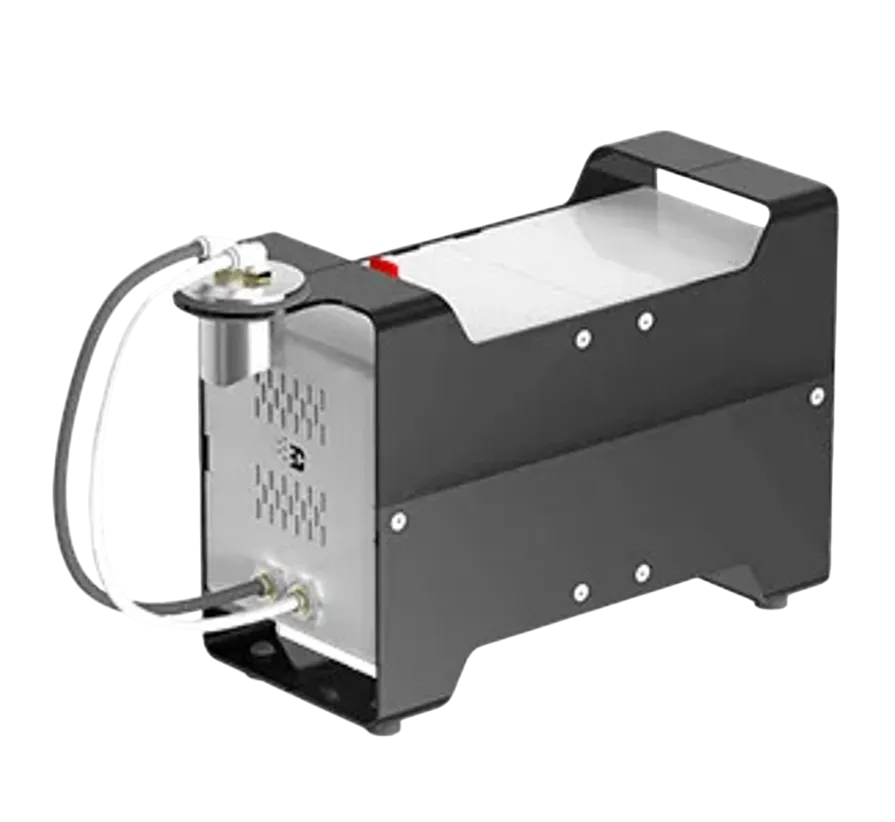


ATO Passivation Module

The ATO Passivation module is an automated system that is used to passivate powder materials by slowly adding oxygen to the powder container.

Build Volume

Dimensions

Technology

Controlled Oxygen Dosing System
The Passivation module designed for the 3D Lab is an automated system that is used to passivate powder materials by slowly adding oxygen to the powder container until it becomes resistant to further reaction with the environment. The passivation process is designed to be controllable and can take between 1-2 hours depending on the type of material being used. The passivation module is designed for use with 3D Lab powder containers, and the automated system ensures that the passivation process is performed safely with no risk of ignition or explosion.

ATO Passivation Module Features

No risk of ignition or explosion

Once the passivation process is complete, the powder container can be safely opened without risk of ignition or explosion. The passivated powder material can then be used in a variety of applications, with the oxide layer helping to maintain the quality and performance of the material over time.

OXYGEN AMOUNT CONTROL

The passivation process itself involves introducing a controlled amount of oxygen into the powder container, which gradually reacts with the material to create a thin, protective oxide layer on the surface of the powder particles. This oxide layer helps prevent corrosion and other forms of degradation, improving the overall stability and performance of the material.

Safe And Comfortable Passivation

The Passivation Module provides a safe and controllable method for passivating powder materials, improving the reliability and quality of the resulting powder.

Use Cases

Safe Powder Handling and Storage

The ATO Passivation Module is used to stabilize freshly atomized reactive powders such as titanium, aluminum, magnesium, and nickel alloys. By forming a thin protective oxide layer, it reduces reactivity and ensures powders can be handled safely in laboratories and production facilities.

Industrial Powder Production

In aerospace, medical, and automotive additive manufacturing, the module prepares powders for long-term storage and consistent printing quality. Passivation minimizes oxidation risks, enabling reliable performance in high-value applications.
Powder Supply and Transportation

Powder manufacturers and distributors use the module to make powders safe for packaging and shipment. Controlled passivation ensures compliance with safety standards while maintaining powder usability.

Research & Development of New Alloys

Universities and R&D centers use the ATO Passivation Module when experimenting with novel alloys such as High Entropy Alloys (HEAs) or custom compositions. Controlled passivation allows safe testing of small powder batches while preserving their material integrity for further studies.

Discover Additive Technologies

Connect With 3D Print

Most asked questions

Frequently asked questions

The A30 Metal 3D Printer supports a wide range of metal powders, including stainless steel, titanium, Inconel, cobalt chrome, aluminum, and more, giving you the flexibility to choose the right material for your project.
The A30 stands out for its compact size, making it perfect for small labs and tight spaces. Its 200W laser and energy-efficient design ensure high-quality, precise prints while keeping operating costs low.
With a maximum scanning speed of up to 10 m/s (32.8 ft/s), the A30 is designed for fast, efficient production to help meet your project deadlines.
Maintenance is straightforward and minimal, thanks to the robust build and high-quality industrial components. Regular checks and standard upkeep will keep it running smoothly, saving you time and effort.
The A30 has a compact build volume of Ø30 x 60 mm (Ø1.2 x 2.4 in), ideal for producing small, detailed parts such as prototypes, custom components, and educational models.
Yes, the A30 Metal 3D Printer is designed for simple setup and user-friendly operation. It fits through standard doors and elevators, making it easy to install in most lab or workshop environments.